
Oct. 7 marks 20 years since the United States and its allies invaded Afghanistan marking the first engagement in the global ‘War on Terror.’ With The Taliban back in power, I spoke with Lance Corporal (LCpl) Adam Curcuru on his time in Afghanistan, what two decades of war has meant for him, and his outlook on the future of Afghanistan.
Nov. 11, 2021
By Noah Ashe
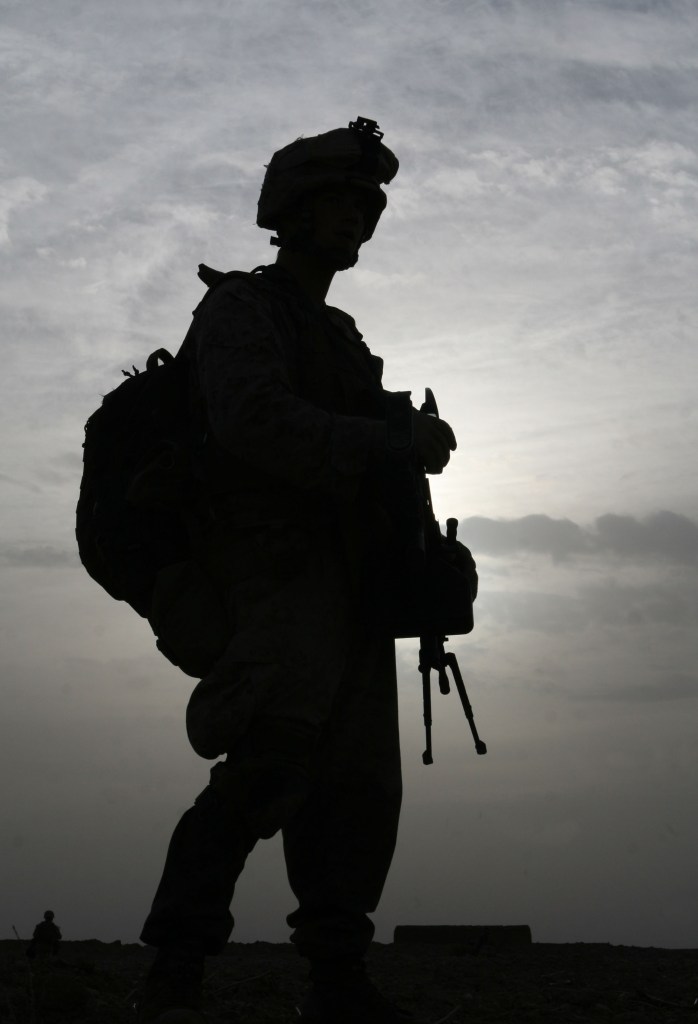
GLOUCESTER, MASS. – On the morning of Sept. 11, 2001, then 14-year-old Adam Curcuru was sitting in a classroom at St. John’s Preparatory School in nearby Danvers when he had overheard that a plane had struck the North Tower of New York City’s World Trade Center:
"I had no idea what the World Trade Center was and I'm sure a lot of people didn't know what it was...You kind of knew something was going on, at some point you knew the country was going to go to war."
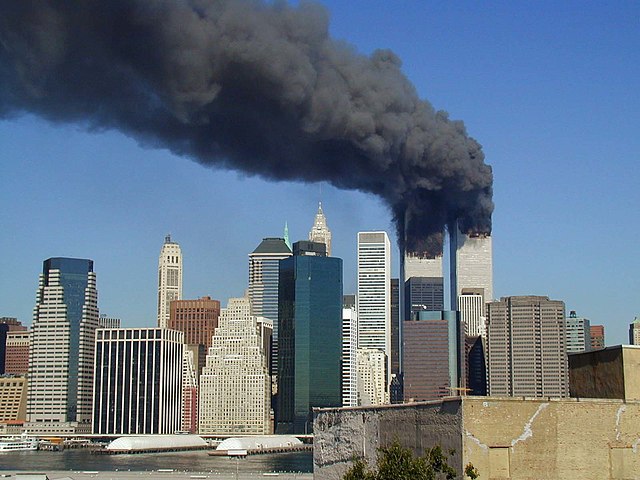
Credit – Michael Foran/Flickr
In the immediate days and weeks after the attacks, Americans grieved over the incomprehensible loss of life. The prevailing sense of security Americans had prior to 9/11 was to be shattered permanently and the post-9/11 era ushered in a series of extensive changes to among other things, a new emboldened and confrontational foreign policy in countering the United States newest emerging threat – Islamic extremist inspired terrorist attacks primarily emanating from Osama bin Laden’s al-Qaida, who since 1996 had been sheltered by the Taliban, who at the time of the attacks had ruled over Afghanistan for five years with an iron hand and had become infamous for its barbaric and treatment of women and girls in particular. The administration of then president George W. Bush was dominated by neoconservative voices that included; Vice President Dick Cheney, Secretary of State, Colin Powell, Secretary of Defense, Donald Rumsfeld, National Security Advisor, Condoleezza Rice, John Bolton who later became the National Security Advisor for the Trump administration and Paul Wolfowitz among several others. All pushed strongly for the U.S. to respond forcefully militarily and in addition to retaliation sought to further the spread of nation building efforts that sought to remake the Middle East in the image of the United States.
Public opinion at the time was overwhelmingly favorable to going to war. Contrary to today’s climate of intense political polarization, in 2001 both Democrats and Republicans were nearly uniform in their support for military action. A week after the attack, Congress almost unanimously passed the “Authorization for Use of Military Force” (AUMF), a joint resolution that empowered the President to:
"Use all necessary and appropriate force against those nations, organizations, or persons that he determines planned, authorized...or aided the terrorist attacks on September 11, 2001...or harbored such organizations or persons, in order to prevent...future acts of international terrorism against the United States."
The question then became not if war was coming, rather inevitably when war was coming. On Oct. 7, 2001 the United States in tandem with its NATO allies began its invasion of Afghanistan to capture Osama bin-Laden and drive the Taliban from power. A new era had begun, the effects of which would continue to be felt across the world some two decades later.
A few years after 9/11, Curcuru – like so many other soon-to-be high school graduates questioned what was next in life. For Curcuru, the answer came relatively quickly:
“I was adopted at the age of one. I was born in Honduras in Central America…so I’ve always kind of grown up with with the sense that I had a duty and an obligation to serve the country that has been so good to me. I spent the first year of my life in an orphanage…I don’t remember what that was like, but it’s definitely impacted my decisions I’ve made…that’s definitely the leading factor behind me wanting to serve.”
Curcuru’s additionally cited both of his grandfathers – one who served in the Marines, the other in the Navy during the closing stages of the Korean War though neither saw combat.
"Everything about them really developed who I was...and who I wanted to be...and for them a chapter of their life was military service."
With the war in Afghanistan a distant thought, upon graduating from St. John’s in 2005, Curcuru enrolled at St. Leo University in Florida for a semester before returning to Massachusetts in early 2006 to enroll at nearby Salem State University. At this point, the United States was deeply involved in two regional wars, with the U.S. and its allies invading Iraq in 2003 ousting Saddam Hussein’s regime from power. With a sense of obligation, Curcuru enlisted with the Marines in October 2006 and on Dec. 11, 2006, left Gloucester headed for Parris Island in South Carolina, home to the Marines boot camp.
After completing basic training, Curcuru was first deployed to Iraq in a particularly contentious phase of the war. While the initial reaction among Iraqis to the American invasion in 2003 had been positive, by 2006, the American presence in Iraq had led to deep resentment among many Iraqis, with some in the U.S. questioning whether or not the U.S. should continue the wars in both Afghanistan and Iraq amid egregious documented instances of torture by American troops and intelligence agents. Coupled with sectarian violence and the power vacuum that resulted from Saddam’s overthrow, President Bush in 2007 announced a surge of 30,000 additional troops to stabilize the deteriorating situation. By the time the U.S. formally ended its mission in Iraq in 2011 4,492 American soldiers were dead.
Upon taking office in January 2009, then President Barack Obama continued his predecessor’s policy of increasing the number of U.S. troops in Afghanistan in an effort to bolster the Western-allied Afghan government in Kabul. Curcuru recounted listening to Obama speaking to graduates at West Point Military Academy a few months after his inauguration:
"I remember watching this from Camp Lejune...he stood before the West Point graduates and he said we were going to send thousands of troops to finish off Afghanistan and to take Afghanistan back."
Similar to President Bush in 2007 with the surge in American troops in Iraq, in December 2009, President Obama announced a surge of an additional 30,000 troops to counter the Taliban, al-Qaida and other extremist groups seeking to undermine the Afghan government. Among the 30,000 new troops heading to Afghanistan, LCpl Adam Curcuru who had volunteered to go.
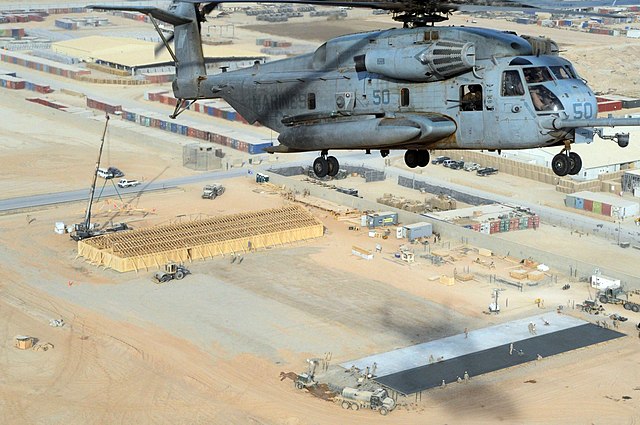
Upon arriving first in Kyrgyzstan, Curcuru and his unit flew into Camp Leatherneck in Afghanistan’s southern Helmand Province, unsure of the role he would serve. During his first month, Curcuru spent the majority of his time transferring supplies and vehicles between Leatherneck and Camp Dwyer, also located in Helmand. At the time, Curcuru was never given the reasoning for this and upon speaking with family and listening to news reports, Curcuru and others soon realized they were preparing for what would be the war’s largest battle at that point.
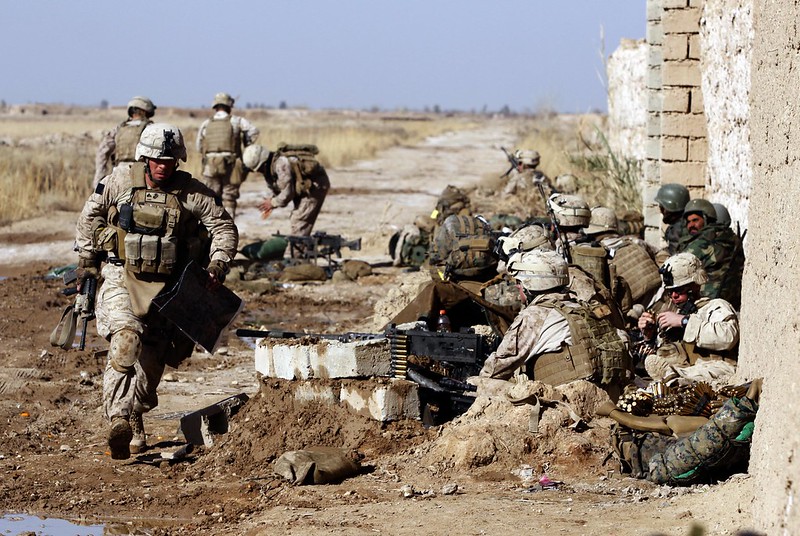
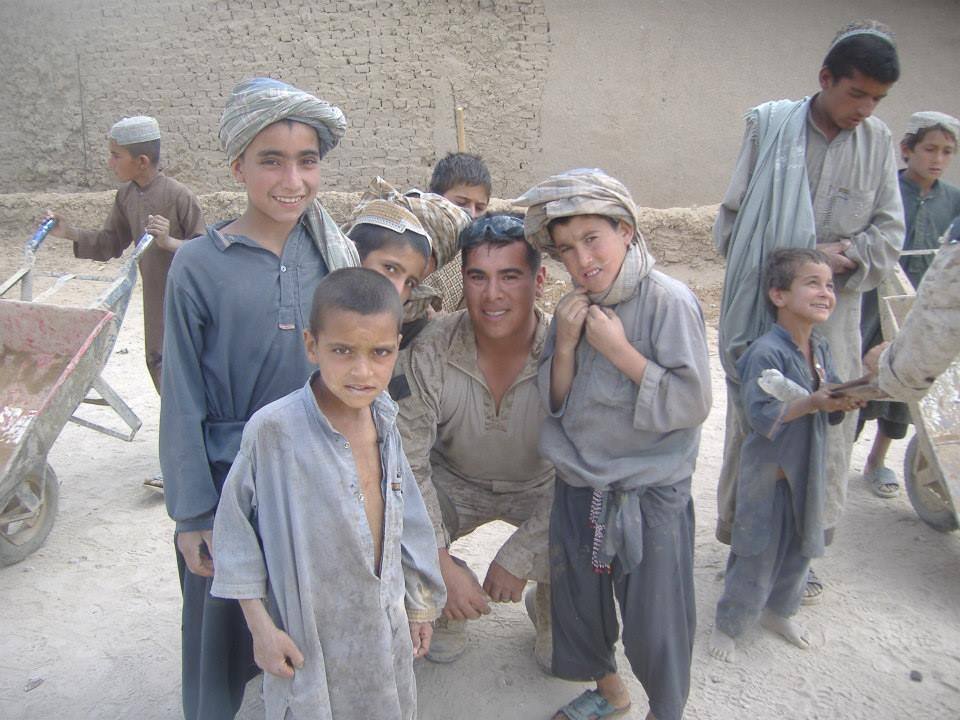
In February 2010, led by the Afghan Army, NATO forces began the offensive in earnest with the goal of eliminating the Taliban’s presence from the city of Marjah; historically one of their strongest areas of support and a key center for Afghanistan’s opium production. Between March and April 2010, now as a machine-gunner for Battalion Six, in four-vehicle convoys with the objective to find the numerous improvised explosive devices that littered the country (IEDs), Curcuru suffered a series of concussions from six IED incidents where his convoy was hit by the roadside bombs. For these injuries, Curcuru was later awarded a Purple Heart. While Curcuru left Afghanistan July 2010, the Battle of Marjah raged on until the end of the year leaving countless American troops dead and an inconclusive outcome that would begin to foreshadow the series of failures and misgivings that led to the Taliban takeover of Afghanistan 11 years later.
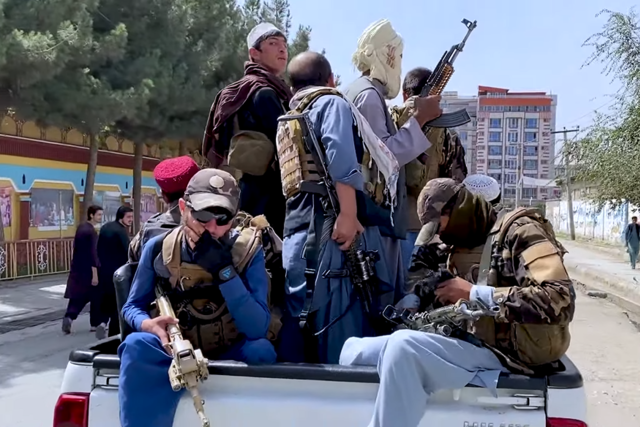
11 years after LCpl Adam Curcuru departed Afghanistan, emboldened by a string of recent victories, leaving many of Afghanistan’s own troops demoralized, a peace deal hastily negotiated by the Trump administration with the Taliban in February 2020 leaving the Afghan government in a crucially weakened position, and a new president firmly advocating for a complete American withdrawal from the country irrespective of the ramifications a chaotic withdrawal may have, on Aug. 15, the Taliban, as they had done 25 years prior captured the capital of Kabul and marked the informal end to almost two decades of war that has claimed the lives of more than 4,000 American personnel and tens of thousands of Afghan civilians among others in an effort that has cost upward of an estimated $83 billion and has dominated the lives of an entire generation. The United States formally completed its withdrawal from Afghanistan on Aug. 31, nearly two weeks after the Taliban reclaimed power and a week and a half shy of the 20th anniversary of the 9/11 attacks that had brought the U.S. to Afghanistan in the first place.
For Curcuru, the last two decades have had a profound impact on his life:
"It's affected every aspect of my life... the good, bad, and indifferent...going to Afghanistan was a humbling experience. It has made me very appreciative of the things we have here...none of us have to worry about a roadside bomb or small arms fire. There's also always the traumas of war through post-traumatic stress and there's aspects of myself of anger, things that I can acknowledge and the stressors that are involved in post-traumatic stress that I think is negative that impact maybe who I would have been had I not been there...but I think overall the perspectives of...fighting a war and seeing the world from a different lens has really made me more compassionate...more accepting... and I think overall has made me a better person."
While they have promised to moderate their tone and ideology from the ’90s and have routinely denied allegations of exacting revenge on Afghans who assisted the American-led coalition and previous government, numerous reports have since emerged that the Taliban has been in the process of rounding up, detaining and punishing those suspected of working for the previous government and the U.S. war effort. While the U.S. was able to evacuate some of these Afghans, many more were left behind and the process of acquiring asylum and to resettle in the U.S. has been complicated, long and difficult for those have since found refuge. Curcuru noted he wondered about the fate of an interpreter that he worked closely with while deployed who had dreamt of visiting the U.S. Curcuru believes that all of the Afghans who assisted the U.S. over the last two decades should be admitted as refugees promptly.
"There's been some negative talk about the refugees not being vetted fully and what if they're going to cause harm...that's not my experience with the Afghans. Most of them didn't support the Taliban or the U.S. and they just want to live in peace with their families without harm..we have an opportunity and an obligation to help them build roots here...we spent 20 years trying to push peace on Afghanistan through war...we as a society should accept the refugees that are coming."
Concerns continue surrounding Afghanistan’s potential to be used as a base of operations to launch terrorist attacks against the U.S. and its allies and shelter terrorist organizations as it had prior to 2001. Curcuru cited historical trends and believed that the potential threat still exists though he maintained that the best counter to this is to establishing a more formal relationship with the Taliban:
"There is definitely a potential threat that Afghanistan could become another stronghold. I think it's important for us as a nation...is to maintain some kind of a relationship with the Taliban. You still have to keep diplomatic ties to some degree to hopefully prevent what happened early on before 9/11...there will always be a threat...but we need to have enough relations with the Taliban to work together to prevent al-Qaida or another organization from taking control of Afghanistan"

The U.S. embassy in Kabul has been shuttered since August 2021 and with the withdrawal of all troops and embassy personnel, the embassy is currently operating from Doha, Qatar. At the time of this writing, the Taliban’s government has yet to receive formal diplomatic recognition from any member state of the United Nations (UN).
Two decades later and more than 11 years after leaving, Curcuru, now 34 is disheartened by the outcome of the war, though he still believed that the war was worth fighting and did not believe blame for the failure of a more favorable outcome could not be blamed on any single person. Curcuru noted and reflected on the gains and strides Afghanistan made in the last 20 years particularly in terms of its improving human rights record.
"I have two young girls... and I look back on Afghanistan and the lives that these young women have. When we went into Marjah there was a building called the 'Yellow Schoolhouse'...after (the Taliban) you had boys and girls going to school there...the last 20 years gave a whole generation of Afghans an opportunity that they would not have had. It was a very small window of freedom...but it did give the population of Afghanistan some sort of resemblance of normalcy."
Curcuru largely credited the U.S. and NATO led mission over the last 20 years with providing opportunities that Afghans did not have under the first Taliban-led regime in the late 1990s though he remained deeply concerned over the potential of the Taliban rolling back the progress made in human rights over two decades though still optimistic Afghans, now having experienced what freedom can be will be able to continue to strive forward well into the future.
The United States’ withdrawal and defeat in Afghanistan has led to many questions about the future – many of which are likely to go unanswered for the foreseeable future. For others, questions of whether or not the war was worth fighting will continue to be debated for years and likely decades to come. For LCpl Adam Curcuru and others directly involved in and impacted by two decades of war, these questions have been replaced with a sense of reflecting on what the last 20 years has meant to them.


