
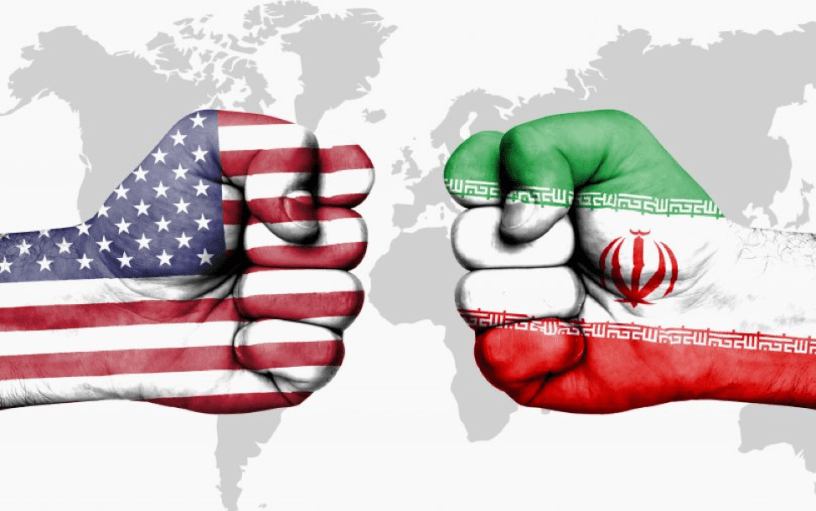
Below is my thesis for the Journalism program at Roger Williams University. Students enrolled in the program must complete a 10,000 word longform story of a topic of their choosing.
America and Iran – A Tale of Best Friends, Today, Sworn Enemies
After almost four decades of hostility, American-Iranian relations are at an all-time new low. Iranian-Americans share their concerns and hopes for the future.

December 11, 2018
By Noah Ashe

Credit – Atta Kenare/Agence France-Presse — Getty Images
PROVIDENCE, R.I. – In the summer of 2017, Sina Noshad, a 3rd year doctoral student studying at Brown University in Providence was eagerly waiting for his older sister, Manzar to arrive in the U.S. with her husband to visit.
Manzar and her husband live in Montreal. After President Donald Trump issued Executive Order 13769, which banned citizens of seven majority-Muslim countries from entering the U.S., the urgency to plan the trip was heightened. After the first executive order was deemed unconstitutional and reversed by federal courts, Noshad resumed planning the trip. However, upon the second revised version of the executive order, the plans were stopped altogether.
“After it (the travel ban) was struck down for the second time, I urged my sister to not apply for a tourist visa despite the court’s decision,” Noshad said. “This was because I heard from some of my friends that the embassies will very likely deny her visa request and any rejection would lower the possibility of getting a visa in the future. Sadly, we waited and waited until the June 2018 Supreme Court decision of 5-4 which made her plans to visit me impossible for the foreseeable future.”
Sina himself has also been subject to the provisions of the travel ban. Although he is in the U.S. on a student visa, as an Iranian national, should he travel outside the U.S., there is no guarantee that he would be able to obtain another visa to reenter the U.S.
This story, like so many others is not only sad but further demonstrates the lack of trust and hostility between the governments of Iran and the United States.
Iran is one of the blacklisted countries under Trump’s travel ban. However, there is no evidence that Iranian nationals that have entered the U.S. and have then gone on to commit acts of terrorism. Most notably Saudi Arabia, where 15 of the 19 hijackers of the Sept. 11 attacks came from was not included on the list.
This past May, President Trump formally announced that the United States would be withdrawing from the Iranian nuclear deal, also known as JCPOA and reinstate sanctions on Iran. When asked for an explanation, Trump’s response was that his administration believed they could work out a better deal. The withdrawal from JCPOA marked one of the largest policy reversals of one of the Obama administration’s landmark foreign policy achievements.
Since then, the rhetoric between the two countries has dramatically become more belligerent, with Trump’s new National Security Adviser, John Bolton, significantly ratcheting up tensions with threats of potential military action and strikes. Iran has responded to these remarks with military threats of its own. Through its statements and actions, the Trump administration has made Iran its public enemy and has yet to tone down the rhetoric. Some commentators have warned that miscalculations and a lack of communication on both sides has the potential to spark an unintentional military conflict that would only plunge the Middle East into deeper instability.
This past November, in an article in The Hill, Bolton warned that more sanctions were in the process of being implemented and that the Trump administration, “is not simply going to be content” with the level of sanctions on Iran during the Obama presidency. The new sanctions targeted Iran’s energy, financial, shipping and shipbuilding sectors. In the aftermath of the announcement, the value of the Iranian rial declined by 70 percent. Bolton has stated that the reimplementation of the old sanctions and the introduction of new ones aims to change Iran’s behavior in the region and to curtail its nuclear program.
So, what exactly happened? How did the Iran and America go from being the best of friends to the worst of enemies?
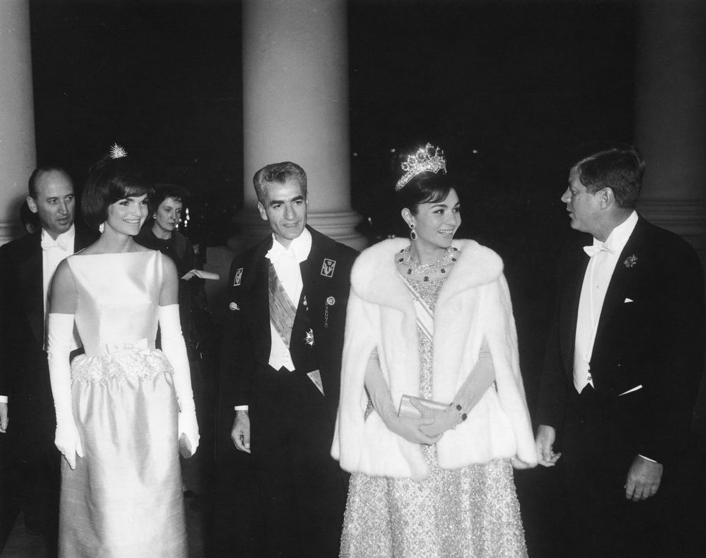
The current hostility stands in stark contrast to over 40 years ago, at a state dinner at the White House, then President Jimmy Carter touted the friendly relationship between Iran and the United States, with his guest of honor, the Shah of Iran, Mohammed Reza Pahlavi.
“We are bound together with unbreakable ties of friendship, of past history, a mutual commitment to the present and to the future,” Carter said. “Our military alliance is unshakable, and it’s an alliance that is beneficent in its impact on the rest of the world. Iran seeks no dominion over other people. They seek no territorial gains. They just want peace, and they have spread their influence, because of the great leadership of the Shah, very rapidly.”
On New Year’s Eve 1977, the Carters flew to Tehran for a state visit, and while at a lavish celebration, Carter toasted the Shah by stating that his government was an, “island of stability in one of the more troubled areas of the world.” This speech enraged many Iranians.
By the start of 1978, Iran, had become one of America’s closest allies in the region, next to Saudi Arabia, preventing Soviet communism from further expanding in the Middle East. Diplomatic and economic relations were at an all-time high. Cultural, educational, scientific, athletic, and tourist exchanges were also at an all-time high. The Shah had sought to modernize his country along progressive Western principles and thought of himself as a contemporary and benevolent ruler. He embraced liberal Western values and modernized his military using American arms. The Shah and his wife, Empress Farah became frequent visitors to the White House. The relationship between Iran and the United States had reached a zenith. This would all come to a screeching halt in 1979.
The Iranian Revolution had monumental and far-reaching global significance. To start, the revolution saw the overthrow of almost 2,500 years of Persian monarchy, and it is to date, one of the only modern revolutions with overt religious overtones. The government that succeeded the monarchy was an anti-Western, revolutionary Twelver Shia Islamic republic that sought to destroy any remnants of Western influences left in the country. It sent shockwaves not only through the Middle East as a whole, but the world. It changed the balance of geopolitics, and permanently damaged relations between Iran and the United States. Within a year, the two countries had gone from being the closest of allies, to sworn enemies. Both countries sought to curb the other’s influence at great cost, often under the threat of impending war. Upon his return to Iran, Khomeini obliterated any trace of American political, cultural and military influence in the country.
Prior to 1979, relations between Iran and the United States at least on a governmental level were incredibly close. The United States actively and openly supported the regime of the Shah, often turning a blind eye to overwhelming allegations of human rights abuses. Keeping the Shah in power was in line with that of American interests in the region. The United States supplied the Shah’s military with the latest in military technology.
Prior to the revolution, Iran, despite its majority Shia Muslim population was a progressive and largely secular country. The Shah came to power in 1941 after the Soviet Union and the United Kingdom invaded the country during World War II deposing Reza Shah, Mohammed Reza’s father, after the former refused to openly side with the Allies during World War II. Mohammed Reza, at the age of 21 took control of a country deeply divided politically and left impoverished. He sought to immediately reverse this.
During the 1950s, a power struggle emerged between the Shah and his democratically elected Prime minister, Mohammed Mossadegh, an ardent nationalist, who sought to seize full control of Iranian resources, primarily oil for the Iranian people and businesses to exploit. At the time, the United Kingdom held control over Iranian oil and related infrastructure. As such, when Mossadegh made a unilateral decision to nationalize the Iranian oil industry, the British were deeply frustrated with this decision.
At the same time, Mossadegh sought to curb the influence and power over the Shah over the country, seeking to slowly transform Iran into that of a constitutional monarchy, where the Shah would have remained a ceremonial figurehead. Mohammed Reza himself at the time was in no power to object to this.
What Mossadegh did not know was that the United Kingdom had contacted the Central Intelligence Agency and made the case that Iran was about to fall into the hands of the Communists and become a Soviet client state, similar to that of the Eastern Bloc in Europe. Iran would have offered Moscow access to the Persian Gulf and would have given it access to Iran’s vast oil resources. An agreement was made to act against Mossadegh and return to the previous status quo, where the Shah would be kept in power, have increased powers and as a result, maintain both American and British interests.
In 1953, the stage was set and the CIA successfully launched a coup, with Mossadegh being placed under home arrest. The Shah was restored to the throne, this time with increased powers. This episode would not be forgotten by the Iranian public.
After the 1953 coup, without any viable opposition, and coming under pressure from the United States, the Shah pushed forward his vision of rapid modernization and reforms to change the societal fabric of Iran. This series of reforms became known as the ‘White Revolution’. The overall goal of this ‘revolution’ was to develop a utopian society in Iran. It sought to cultivate and further expand Iran’s middle class and to expand the national economy. Its defining principle of modernism was supposed to legitimize and demonstrate that a modern monarch would abolish an old almost feudal-like system that was holding back Iran’s potential and standing in the world.
According to a journal article published in Asian Affairs, while both Mohammed Reza and his father Reza Shah before him claimed to be constitutional monarchs, they sought absolute power. During the entirety of the Pahlavi era, the monarchy went through phases of being bound by constitutional checks and balances, and at other times wielded absolute power. By the end of their reigns, both monarchs’ power was unchecked and absolute. During these periods, basic human rights, the powers of the Iranian Parliament and academia were stifled. Ayatollah Ruhollah Khomeini first publicly criticized the Shah in a speech in 1963, over the latter’s land reforms and granting women more rights in the country. Khomeini and the rest of the Shia clergy believed that they were the guardians of Iranian tradition.
Suzanne Levi-Sanchez, an Assistant Professor of National Security Affairs specializing in Iranian affairs at the U.S. Naval War College in Newport, R.I. explains that the Shah’s reforms and modernization began to slowly alienate and upset the more conservative sector of the population, most notably the religious. The Shah’s reforms were vehemently opposed by the Shia Muslim ayatollahs, clerics and mullahs, who believed were contrary to the principles and ideals of Islam.
“The Southern Tehrani citizens were upset that the Shah banned hijabs in public.” Levi-Sanchez said. “They rallied support against the Shah and the West because of the Shah’s religious crackdowns. What started out as a Western friendly population, as the Shah became more corrupt and secular, more anger was directed at the Shah and the United States. Ayatollah Khomeini brought together the Tudeh Party (Communists) and pro-women rights groups and the Islamic fundamentalists to overthrow the Shah.”
A rise in oil prices from 1973 to 1974 encouraged the Shah to hope for a quick economic miracle. This failed and 18 months later ended up with chaos, congestion of Iranian ports, and a shortage of the most basic of goods and services.
In 1975, the Shah tried to solidify political control over the country by establishing the only legal political party during his reign, the Rastakhiz. At the same time, Mohammed Reza introduced a new Imperial calendar, further contributing to economic decline and chaos. The mid 1970s marked the beginning of the end for the regime as it grew to be more unpopular and began to lose its legitimacy and credibility among the public. Under his “Great Civilization” dream, the Shah hoped for a slow and gradual liberalization of society to bring Iran into the 1980s.
In November 1976, Jimmy Carter was elected as President of the United States. Carter placed an emphasis on human rights with regard to American foreign policy, catching the Shah off guard. However, the Shah acted accordingly to the new American president. Censorship relaxed, torture within the Iranian prison system ended and the Shah replaced his former Prime minister. However, with this moderate level of openness, the effect was that it only further emboldened opposition to the Shah. As such, the opposition started to speak out more openly and freely. The population was no longer willing to remain silent, as they had during the 1950s and 1960s. Iran was on the verge of revolution.
Col. Gary Sparrow, a military professor at the Strategy Policy Department at the U.S. Naval War College in Newport, R.I. believes that the revolution later carried anti-American sentiments as the Shah had associated himself with the U.S. during his reign and the U.S. sold the Shah large quantities of weapons. Sparrow believes that this cemented the fervent anti-American sentiments of not only the revolution but of the anti-American rhetoric that still comes from the Islamic republic to this day.
“The Shah was making America guilty by association as he was buying a lot of military equipment from us,” Sparrow stated. “Carter went to Tehran in 1978, the people were expecting Carter to press him on human rights, and he didn’t. The rise of the mullahs started to foment unrest and people connected the Shah and the U.S. together. The revolution was more anti-Shah because his policies made the public unhappy. However, U.S. support for the Shah contributed to this. Once the Islamic Republic was established the U.S. has been portrayed ‘The Big Satan’. The opposition to the Shah consisted of several differing groups, most of which had conflicting ideologies. Ayatollah Khomeini led the Islamists, who sought the creation of an Islamic republic within Iran, the Tudeh Party and other communist factions, democrats, nationalists, feminists, and human rights activists coalesced with one another and temporarily worked together to realize their common goal of seeing the overthrow and replacement of the Shah’s government. However, the question of what would replace the Shah’s regime was never agreed upon.”
In October 1977, the seeds of the revolution were planted when Khomeini’s eldest son, Mostafa died. Khomeini and other opposition figures quickly placed the blame on the SAVAK, the Iranian secret police, though there is little evidence to support this theory. However, given the unpopularity of the regime, this narrative was easily believed by many. Within Iran, calls for Khomeini to be allowed to return to his native country only grew louder.
According to Maryam Attarpour, 25, the founder and former president of the University of Rhode Island’s Persian Cultural Society and an Iranian-American herself, believes that the revolution was predominantly anti-imperialistic in its overtone. However, she admits that the revolution also contained anti-American sentiments due to U.S. support of the Shah.
“The Iranian people had many grievances against the Shah,” Attarpour said. “His use of SAVAK to intimidate, threaten, and murder opposition members were some of the most brutal tactics Iranians had seen at that time, and they felt a well-educated population deserved better. The vast opposition to the Shah actually began with the CIA staged coup that ousted Mohammed Mossadegh… the coup divided the country and so did the Shah’s ‘white revolution’. His persecution of religious figures and exile of Khomeini led to his ultimate demise.”
The situation was only to be made worse when in January 1978, an Iranian newspaper published a stinging critique of Khomeini, alleging he was a spy for foreign powers. When news of the article reached the city of Qom, Iran’s religious center, riots ensued, and between five and nine people died. 40 days later in the city of Tabriz, during a memorial service for those who died in Qom another rampage ensued in which symbols of the Pahlavi dynasty, cinemas, luxury hotels, banks, liquor stores, and properties owned by the Bahai sect (a persecuted religious minority in Iran) were all set ablaze. For the first time, the army was deployed to quell the unrest. The resulting aftermath left another six dead. By June 1978, protests had become more widespread and common, almost predictable. In response to the growing unrest, the Shah left Tehran for his villa on the Caspian Sea and the American and British ambassadors left the country on “leave.”
The primary catalyst to the revolution occurred later in August 1978, when the Cinema Rex Theatre in the city of Abadan was set ablaze by arsonists during a packed showing. In one of the world’s worst acts of arson, an estimated 470 people died, and this event marked the start of the largest protests to come out of the revolution. The Shah’s government stated that Islamists and Communists were to blame for the fire, while Khomeini and his supporters were quick to point the blame to the SAVAK. It would later be determined in the aftermath of the revolution that the ringleader of the plot was a disenchanted drug addict, who would later be executed. Nevertheless, the belief that the Shah and his secret police were the ones to set the cinema ablaze endured and only further enraged the population.
As a conciliatory measure, and as an attempt to stem the tide of revolutionary fervor, the Shah dismissed his longstanding Prime minister and replaced him with Jafar Sharif Emami, who tried to appease the religious opposition by reversing some of the Shah’s more liberal policies. As such, casinos were shut down, reinstating the Islamic calendar that the monarchy had replaced with its own Imperial calendar and permitting marches at the end of Ramadan. The monarchy also promised to reinstate principles of Islam in its governing. To appease the non-religious opposition, pledges were made to loosen press censorship and to hold free and fair elections. The Rastakhiz Party that was established in 1975 to consolidate the Shah’s political control was dissolved. This did nothing to stem the tide of revolution.
In an effort to break up the revolution’s momentum, Emami imposed a nationwide curfew and martial law in Tehran and other major cities. This was to begin on the morning of Friday Sept. 4. However, a lack of communication meant that the order did not go out until 6 a.m. that same morning, by that time crowds had already assembled and protesting had begun. In a series of confrontations that day, 64 people were killed after the army fired upon the protestors. The day became known as Black Friday, and when the American and British ambassadors returned from their leave, they observed that the Shah appeared to have lost any and all morale and motivation to quell the only worsening situation.
Black Friday marked a new phase in the course of the revolution. Instead of continuing to go out into the street and protest, the public now resorted to strikes. This crippled the public sector and vital public services. When the strikes reached the oil industry, the regime lost its main source of revenue and credit. By the time the revolution concluded, oil production had almost ceased.
Khomeini himself, at this point in exile in neighboring Iraq was then forced to leave the country by Saddam Hussein, after pressure from the Iranians to remove him. Khomeini, who wanted to remain in the Muslim world, was forced to flee to the outskirts of Paris, where he continued his fiery sermons against the Shah and his government.
Back in Iran, the revolution had resumed taking on a more violent and chaotic drive. Students at Tehran University tore down a statue of Reza Shah, the Shah’s father. The army responded by firing into the crowd, killing one student. The next day, arson attacks on banks, liquor stores, cinemas and even the British Embassy took place.
With the renewal of violence, and at the urging of his advisers, the Shah agreed to the establishment of a military government. In a televised speech to the nation on November 6, the Shah apologized for the decades of authoritarian rule, and promised to enact more reforms and to abide by the Iranian Constitution of 1906, which had intended to limit the political power of the Shah. The Shah stated that he heard and had accepted the revolution.
To try and insert himself into heading the movement for change, the Shah ordered that his longstanding former Prime minister, Amir Abbas Hoveyda and the former head of the SAVAK, Nematollah Nassiri be placed under arrest. After the success of the revolution, both men along with several other former officials of the regime were tried in revolutionary courts and tribunals and were promptly executed thereafter.
The Shah’s new Prime minister, Reza Azhari found some success in raising oil production. This however, did not alleviate the strikes and shortages that were crippling the country. After Azhari suffered a heart attack, Iran was without a government for a short period of time, while revolution was sweeping across the nation.
In a last-ditch attempt to preserve the monarchy, and to stave off Khomeini’s impending return, the Shah appointed one of his former political enemies, nationalist Shapour Bakhtiar in who would be his final Prime minister. Bakhtiar’s appointment to the role of Prime minister was supposed to act as a symbolic concession to Khomeini’s followers and other members of the opposition as Bakhtiar had been imprisoned multiple times during the reign of the Shah for his moderate opposition.
Immediately after becoming Prime minister, Bakhtiar reversed the policies of the military government and attempted to reverse the revolution, by implementing policies that would have led to the resumption of a civilian government. Under Bakhtiar’s short premiership, press censorship was loosened, political prisoners were released, martial law was revoked and Bakhtiar asked the Iranian Parliament to hold new elections in 3 months’ time. Unfortunately, because the public tied Bakhtiar back to the Shah, his government proved to be massively unpopular and this was not helped by the fact that Ayatollah Khomeini came out publicly against Bakhtiar and his government and continued his calls for the overthrow and abolition of the monarchy from exile in Paris.
After witnessing and receiving reports of increased amounts of violence, the United States reversed its longstanding policy of hoping the Shah would ride out the revolution and instead urged the Shah to leave the country, in the hopes that the situation would later stabilize.
At the start of 1979, sensing the worst had yet to come, the Shah made the ultimate decision to go into exile with his family and closest of advisers on January 16 for Cairo. Like his father Reza Shah before him, he would never return. In an article featured in the Washington Post, his departure from the country was officially labeled as, “winter vacation to seek rest and medical treatment”. Most observers both inside and outside Iran had conceded that he had lost control of the country and that the revolution had succeeded. Prior to his departure he instructed Bakhtiar and his generals to stave off Khomeini’s return and to keep the monarchy in place. It was too late for this.
Ayatollah Khomeini returned to his native Iran to a crowd of millions on February 1. Upon his arrival, he immediately denounced and sought to destroy Bakhtiar’s government and any remains of what was left of the Shah’s 37-yearlong rule. He appointed his own Prime minister, Mehdi Bazargan, which for a brief time existed alongside that of Bakhtiar’s own government. At this time, the Imperial Iranian Armed Forces were still at least on a technical level loyal to the Shah. Clashes between the military and protesters continued.
Joseph Roberts, an Associate Professor of International Relations at Roger Williams University in Bristol, R.I. stated:
“Iran overnight went from being a secular authoritarian state to a theocratic authoritarian state. This was a homegrown revolution that kicked out a foreign overlord and reimposed local control and governance.”
After a group of soldiers mutinied on February 9, any little remaining chance of the Shah returning to the throne faded when on February 11, when the military declared neutrality in the conflict, effectively paving Khomeini’s path to power. That same day, Bakhtiar’s government, which relied on support from the military fell. After being labeled as a puppet of the Shah and sentenced to death by the newly created revolutionary tribunal, which was tasked with trying officials of the former regime. Bakhtiar emerged in Paris, where continued his opposition to the new Islamic government and formed a power base among Iranian exiles. He would live in Paris for the next 12 years until 1991, when he and his secretary were assassinated by agents associated with Iran’s secret service.
Sanchez noted that Ayatollah Khomeini was able to pull different ideological and political factions together to unite against the Shah. These varied from democratic advocates, to Communists to the conservative Shia clerics and women’s rights advocates. However, upon the conclusion of the revolution, Khomeini consolidated power and in doing so, alienated all of the other factions that helped him to overthrow the Shah and began a massive and widespread campaign to root out these groups from society in an effort to solidify control over the newly created Islamic Republic. In the immediate aftermath of the revolution and for the years that followed, widespread arrests, imprisonments, and executions of perceived political opponents and enemies became the norm.
In April 1979, to formalize the end of the monarchy, Iran held a referendum on the government to succeed the Pahlavi regime. The Iranian public voted overwhelmingly to abolish the monarchy and to replace it with an Islamic republic. Khomeini later took office in December as Iran’s first Supreme Leader. Under his notion of Velayat-e faqih, or Guardianship of the Islamic Jurist. Khomeini believed in a government run by members of the Shia clergy, in which the leader of the country would be a Shia ayatollah, the highest clerical position in Shia Islam, chosen by God. Under this idea, Khomeini desired to spread his Islamic revolution throughout the Middle East. This caused great alarm and angst among Iran’s neighbors, especially the Sunni-ruled Persian Gulf monarchies. Khomeini later declared that Islam was opposed to the very idea of monarchy. Efforts were made in the Muslim world to isolate and alienate Iran from the international scene in an attempt to contain the revolution. As such, in the aftermath of the revolution, Iran was left isolated, and in the midst social and economic crises.
From the view of the Western world, the loss of the Shah was a blow to Western interests in the country. Upon taking power, Khomeini denounced Western culture and practices as corrupt. Once the revolution succeeded, anger turned to the United States for its decades long support of the Shah and his authoritarian regime. Intelligence reports had initially stated that the Shah would survive the uprising. However, once he was overthrown, the U.S. attempted to reach out to the new government and tried to establish a relationship.
Sina Noshad believes that that the Iranian Revolution at least in its early phases was not directly against the United States.
“There are numerous reports (released by WikiLeaks) that give a clear account of the behind the scenes talks between revolutionary forces and the Carter administration. “The account shows how the revolutionaries were hoping to have cordial relations with the U.S. post-revolution and how the U.S. was looking for the same.”
However, by the end of 1979 with Ayatollah Khomeini’s consolidation of power, Noshad notes that the revolution had begun to take an outwardly anti-American stance:
“The inflection point however, was the fact that the U.S. allowed the Shah to come to the U.S. for medical treatment. This was deemed unacceptable by the people… and followed by the hostage crisis that changed the political landscape of Iran for the foreseeable future.”

Maryam Attarpour states that in the aftermath of the revolution, the Carter administration had come to accept the inevitable and offered to recognize the new Islamic government in Tehran. However, with the overwhelming presence of anti-American overtones in the revolution, Attarpour believes that it was almost impossible for the new government to be able to establish a positive relationship with the U.S.
“The U.S. assumed they could negotiate and befriend the new regime, and that they would be more pliable as a new regime that would need U.S. assistance.” Attarpour said. “The opposite occurred. The stakeholders who took control of Iran after the revolution did not want American involvement or ‘friendship’; I like to believe this was in part because of what they saw happen to the Shah, and also because the people of Iran were tired of the American government not serving their own interests at the cost of the Iranian people and their natural resources. It was also a critical time in history with the Cold War… Iranians did not want to be added to the list of countries that had ruling dictators who served American economic interests.”
Khomeini, after years of exile was in no mood to what he thought would be conceding to what he called “the Great Satan”. On Nov. 4, 1979, after massive protests, Iranian students stormed the U.S. Embassy in Tehran, taking the remaining diplomatic personnel. This incident would shape American-Iranian relations for decades to come and continues to do so today. The embassy had been subject to attempted seizures twice before, these incidents had been resolved diplomatically. In the months preceding the actual hostage crisis, the number of diplomatic personnel in the U.S. Embassy in Tehran had been reduced dramatically in the expectation of such incidents. At the time of the hostage taking, there were an initial 66 hostages. Later this number was reduced to 52, after 14 of them were released.
The hostage crisis resulted in the resignation of the Iranian cabinet after Khomeini gave his blessing to the hostage taking. Iran became an international pariah overnight, and the U.S. implemented the first of many sanctions against the country.
For over a year, the hostages were held at the mercy of the students, in a country that had come to despise their very existence. The hostages were regularly blindfolded and paraded in front of other Iranians and jeered at. The hostages did not know if they were going to be tortured, executed or imprisoned indefinitely.
In an attempt to rescue the hostages, President Carter over the objection of some of his advisers gave the green light for a military rescue operation. In what became known as, Operation Eagle Claw, the operation was supposed to drop a team of elite soldiers into the embassy compound, and extract the remaining hostages. Unfortunately, while en route to the embassy, several of the helicopters were caught in a sandstorm, causing the helicopters to malfunction, one of which crashed. Eight American servicemen and one Iranian civilian were killed and the mission was aborted.
After 444 days, seconds after President Ronald Reagan was inaugurated, the hostages were released and flown back to the U.S. under a backdrop of excitement and relief. Most observers believe that Carter’s inability to bring the hostages back under his presidency was one of the key factors as to why he lost the presidential election of 1980.
In neighboring Iraq, the Ba’athist government under Saddam Hussein was especially alarmed at reports coming out of Iran. Iraq, like Iran has a majority Shia Muslim population. However, the Ba’athist government was almost exclusively Sunni Muslim and it had pursued a campaign to alienate and exclude the Shia from all aspects of Iraqi society. Using an old territorial dispute as a pretext, in September 1980, Saddam’s army invaded Iran in the hopes of preventing any spread of revolution in Iraq. While his goals and motives for war were unclear, it is believed that Saddam wanted to annex Iran’s Khuzestan Province, which is predominately Arab and to seize control over some of Iran’s oil reserves. Iran, in the process of rebuilding after the revolution was not militarily prepared for and caught off guard. Saddam believed a quick victory was to come.
Though Iraq was the aggressor, Saddam was readily supported by the West and most of the Muslim world, who came to see Iran as a growing geopolitical threat. After a string of losses in 1982, Iraq through the United Nations began presenting multiple cease-fire attempts to end the conflict that it had initiated. However, Ayatollah Khomeini refused to capitulate and vowed to fight on until Saddam Hussein was removed from power. As a result, the Iran-Iraq War became a war of attrition, with each side refusing to back down.
Though the U.S. and most of the Western world supported Saddam Hussein’s Iraq in the Iran-Iraq War, there was evidence of cooperation between Iran and the U.S. during the war. In what became known as Iran-Contra, the Reagan administration was in violation of arms sanctions by selling spare weapons and their parts to the Iranians to use in their fight against the Iraqis. The money received from the purchase of weapons was then used to fund the Contras rebels in Nicaragua. Senior staff officials of the Reagan administration were implicated in being complicit in this scandal and many were indicted and convicted. President Reagan himself remained aloof of the scandal and his knowledge or role in the affair is still debated to this day.
By the start of 1988, with both countries being decimated by eight years of war, and with no end in sight, at the urging of the UN and other countries, both sides agreed to a ceasefire, which became a permanent peace treaty. Nevertheless, the arming of Saddam Hussein, who at this point was known to be a cruel dictator in the interest of preventing Iranian expansion left Iranians feeling abandoned and forgotten by the outside world.
In 1988, as the war was drawing to a close, the USS Vincennes, an American warship stationed in the Persian Gulf shot down Iran Air Flight 655, an Airbus A300 jet bound for Dubai. All 290 people on board died instantly. The airliner shootdown preceded clashes between the Vincennes and smaller Iranian gunboats. In Iran, this incident hardened the views of the conservative elements of the country that the United States was intent on destroying Iran.
Almost a year later, in June 1989, Ayatollah Khomeini died of a heart attack, leaving a country with no known successor. Khomeini never publicly named a successor. However, to prevent a major power vacuum, the Assembly of Experts, Iran’s top decision-making body quickly moved to appoint a former Iranian president, Ali Khamenei to the position of Supreme Leader. Khamenei has ruled the country since.
The death of Khomeini prompted some diplomatic circles to believe that a rapprochement with the U.S could be possible. Unfortunately, Khamenei continued the hostile rhetoric towards the United States. Maryam Attarpour attributes the continued absence of diplomatic relations between the two sides due to a lack of trust and hostile rhetoric continuing to emanate from both sides.
“The death of Khomeini did not change the policy of the new regime. A new Supreme Leader was put in his place, and the regime continued the same policies. With each election in Iran and the U.S., relations change. Under President Mohammed Khatami and the Clinton administration, Iran had a more moderate stance and policy with the U.S., although it was still hostile. Then we elected President Bush, and the ‘axis of evil’ comment brought up all kinds of hostility. In short, no one wants to make concessions and appear weak. Diplomacy has to be embraced by both sides to work. Every two to four years, we brace ourselves for a shift in relations. Depending on who wins elections, it can be hopeful or prosperous, or resemble the current climate- a cluster.”
As mentioned previously by Attarpour, in 1997 under Mohammed Khatami’s presidency, tensions between Tehran and Washington were slightly reduced. In a January 1998 interview with CNN, when asked about the 1979 hostage crisis, Khatami offered an apology.
“I do know that the feelings of the great American people have been hurt and of course I regret it.”
In the late 1990s, both countries despite major reservations and concerns from both sides decided to implement a “civilizational dialogue”. Under this policy, cultural exchanges between the countries expanded. In the same year, American athletes visited Iran for the first time since the 1979 revolution. This was followed by academic exchanges between American and Iranian scholars and academics.
In 1998, militants associated with the Taliban captured the Iranian consulate in Mazar-i-Sharif in Afghanistan and eventually executed the 11 Iranians in the consulate, 9 of whom were Iranian diplomats. In response to this, Iran began to mass its armed forces on the Afghan-Iranian border, but under intense international pressure and mediation from the UN, Iran withdrew their forces.
In 2000, then-Secretary of State Madeline Albright gave a speech that apologized for past U.S. interference in Iranian affairs, specifically the 1953 American engineered coup against former Iranian Prime minister, Mohammed Mossadegh and the reinstallation of the Shah to the throne. The apology was described by many outside observers to be “too little and too late”. The Iranian government responded to the apology harshly.
For the following three years, Iran and the United States did not interact with each other. Most sanctions were still in place and enforced rigidly under the Clinton administration stifling any diplomatic breakthrough. The tepid relationship would change dramatically on a sunny Tuesday morning in late summer 2001.

The attacks of Sept. 11, 2001 drastically altered the relationship between Iran and the U.S. On that morning, four airliners were hijacked by operatives associated with Osama bin Laden’s, al-Qaida terrorist organization. Two of the flights were flown into the twin towers of New York’s famed World Trade Center, both of which later collapsed due to intense heat and fire. Another plane, American Airlines Flight 77 was flown into The Pentagon, striking the defense center of the U.S. A final plane, United Airlines Flight 93 crashed into a field near Shanksville, Pa. after a passenger revolt foiled the hijackers’ plans of crashing the plane into another symbol of importance in the Washington D.C. metro area. 2,996 innocent people lost their lives within a span of less than two hours, and the attacks left the world shocked and quickly condemned by countries worldwide, including those with a historically hostile relationship with the U.S.
Iranian leaders, fearful of speculation that Iran would be tied to the attacks were quick to issue statements condemning the loss of life, and going further by stating that such attacks were contrary to Islam’s most basic principles. In Tehran, where crowds of Iranians would usually gather to demonstrate against the American government, crowds of mourners prayed for the victims and their families of that day’s heinous attacks. Public denunciations from the Iranian government were issued. Supreme Leader, Ali Khamenei and President Mohammed Khatami personally issued statements condemning the attacks. The daily chants of “Death to America” by Iranian clerics was temporarily halted. The chant “Death to America” was temporarily replaced with chants against al-Qaida, the Taliban and Osama bin Laden himself.
In the immediate aftermath of the attacks, both countries soon realized that they were battling a common enemy. Despite allegations of collaboration between Iran and both the Taliban and al-Qaida, they were fundamentally opposed to one another on religious grounds. Iran being a majority Shia country, with Shia clerics running the country came into conflict with the Sunni fundamentalist Taliban and al-Qaida, who see the Shia as heretics and blasphemers and call for them to be wiped out. In the years preceding Sept. 11, Iran had been waging a low-scale war against both al-Qaida and the Taliban.
Less than a month after Sept. 11th, on Oct. 7th, the U.S. commenced Operation Enduring Freedom and it along with its coalition allies invaded Afghanistan. A month later, the Taliban controlled regime was thrown out of power and the U.S. with its allies worked to install a new democratic government that would someday be able to control its own internal problems. There is evidence of contacts between Iranian and American officials before and after the invasion of Afghanistan.
Shortly after the Taliban was overthrown, American and Iranian diplomats, along with representatives from other UN members met in Bonn to discuss the formation of a new Afghan state, and the introduction of a new constitution. This was the highest-level meeting of both American and Iranian officials since the revolution, a historic moment in itself. In the resulting Bonn agreement, Iran personally brought up issues that the agreement failed to mention; the introduction of democracy and a pledge to help fight coalition members fight in the War on Terrorism. As such, the agreement was revised. Since then, the U.S. has been involved in its longest war and has remained in Afghanistan since 2001, training Afghan forces and building them up in the hopes that someday they will be able to fight the remaining factions of al-Qaida, the Taliban and other insurgent groups. As of now, this has yet to happen.
After 2001, American focus shifted to Iraq. During his campaign, George W. Bush pledged to take a more aggressive stance against Saddam Hussein’s regime. In the U.S., the administration’s new focus shifted to linking Hussein with bin-Laden and al-Qaida, and telling the international community that Hussein’s Iraq was in possession of nuclear weapons and continuing to stockpile chemical and biological weapons.
In 2002, during his State of the Union address, President Bush coined his infamous “axis of evil” label to refer to international pariah states. His list of blacklisted countries included Iran along with Iraq. In Iran, this was received harshly and dealt a massive blow to then-President Mohammed Khatami’s foreign policy initiatives in rapprochement with the West.
In the lead-up to the Iraq War, Iran and other countries via the UN fiercely opposed and lobbied against any military action in Iraq. For Iran, this would mean that American forces would be present on both their eastern and western borders, a situation deemed to be uncomfortable if not outright intolerable by Iranian leaders.
Over the objection of both the UN, Iran, and others, on Mar. 20, 2003, coalition forces led by the U.S. began their sustained campaign to oust Saddam Hussein and his Ba’athist government from power. Within two weeks, coalition forces had reached Baghdad and had forced Hussein and his two sons, Uday and Qusay into hiding. President Bush declared that, “major combat operations” had ended and that the process of rebuilding and democratizing Iraq had begun.
Unfortunately, with the end of the Hussein regime, a large power vacuum emerged and an insurgency comprised of many different competing factions arose with the shared goal of kicking out American and coalition forces from the country. The U.S. quickly accused Iran of funding and providing support for the anti-American Shia rebel groups. There is some evidence that supplements this claim.
Uday and Qusay Hussein were killed in a prolonged fight with American forces in July 2003. Saddam Hussein was not apprehended until Dec. 13, 2003. After a lengthy trial in November 2006, Hussein was found guilty and sentenced to death, for ordering the death of 148 people, after a failed assassination attempt against Hussein. In December of that same year, Hussein was executed.
Another point of contention in the relationship between Iran and the United States is the former’s alleged nuclear program. The U.S., Israel, and other Western countries have raised concerns in the past about the status of Iran’s nuclear program – whether or not the programs are for civilian or weapons purposes.
For its part, Iran has categorically denied that it is in the process of developing any nuclear weapons, stating that the development of weapons of mass destruction runs counter to the principles of Islam. Ali Khamenei issued a fatwa, or Islamic decree in 2003 that allegedly forbids the stockpiling of nuclear weapons under Islamic principles. Nevertheless, the international community and Western nations especially are worried and with good reason to be. Currently Iran has the world’s 13th most powerful military, with an estimated 534,000 active personnel and another estimated 400,000 personnel in reserve. Iran’s large military has made it a regional power in the Middle East and it has used this power to protect its interests and spread its influence in the region.
According to Professor Mark Sawoski, a professor of Political Science and International Relations at Roger Williams University in Bristol, R.I., said that if the Iranians ever possessed nuclear weapons, they would be a force to be reckoned with, one that could further threaten U.S. allies and interests alike in the region.
“Having nuclear weapons offers the Iranians a level of international prestige. Look at the North Korea example,” Sawoski stated.
Col. Gary Sparrow, has been skeptical of information that Iran has not been in the process of developing weapons. Due to security clearances, Sparrow was not able to elaborate completely on the scope and current status of his knowledge. Sparrow points to the heavy water reactors the Iranians are in possession of.
“The only reason to have a heavy water reactor is to create weapons grade material (plutonium), which isn’t only used for civilian purposes. This is what the North Koreans have used to create their fissile material. There are five heavy water reactors in the world right now, three of them produce fissile material for nuclear weapons. The 5th one is in Iran. The Iranians call it, “a research reactor.”
In the years since the Iraq War, elections were held in Iraq. The first free elections that were held voted for an overwhelmingly pro-Iranian government in Baghdad as many of the newly elected representatives were Shia Muslims, in stark contrast to Saddam Hussein’s Sunni-dominated government and military. The U.S. formally concluded its mission in Iraq by the end of 2011, although it has been wary of Iranian interference and influence in Iraqi affairs.
With the election of hardliner, Mahmoud Ahmadinejad as the new Iranian president in 2005, relations took a further dive. Ahmadinejad is alleged to have been a hostage taker in the hostage crisis decades ago, and his rhetoric has been more anti-Western and anti-American than that of past Iranian presidents. The U.S. responded by increasing the level of military personnel in the region and specifically in the Persian Gulf. Ahmadinejad’s comments regarding Judaism, his calls for the destruction of Israel, and denial of the Holocaust have sent shockwaves back in Washington. Iran also actively funds anti-Israeli organizations such as; Hamas, Hezbollah and Palestinian Islamic Jihad that are deemed “terrorist organizations” by not only the United States but by Israel and much of the Western world. Israel has consistently lobbied against any diplomatic initiatives between Iran and the U.S., as it sees Iran as its cardinal enemy. Israel also opposed to the U.S. signing of the JCPOA, the Iran nuclear deal.
Despite the heightened tensions, by most accounts while the Iranian government views the U.S. to be one of its primary enemies, the Iranian public usually holds favorable views of the American public and support diplomatic efforts between the two countries. According to Noshad, most Iranians held favorable views of the American people and that they supported direct talks between the two governments.
“While the Iranian government over the past four decades has considered the U.S. government an adversary, this attitude has not been shared by ordinary Iranian citizens, and specially the younger generations,” Noshad mentioned. “More often than not, Americans are viewed in a positive light. I’ve heard from Americans traveling to Iran that they were treated like celebrities… American news media, Hollywood movies and the U.S. music industry are well-known and consumed by ordinary Iranians. While American food franchises cannot operate in Iran, their bootleg counterparts have certainly flourished. This could be viewed as another indication of acceptance of the U.S. culture and goods by the public; something that the government calls the West’s cultural onslaught and tries to curtail it whenever they can, albeit with little success.”

After the election of Barack Obama in 2008, as part of his new foreign policy designed to reverse the “Axis of Evil” speech made by his predecessor, the Obama administration offered “a new beginning” for diplomacy between Tehran and Washington. This offer was renewed again in 2010 and at various points during his administration. The Iranian government responded in turn by rebuffing the gesture.
However, the Obama administration made several strides in changing the narrative of the people to people relations between Iran and the U.S. Under Obama, the U.S. increased opportunities for Iranian students to come to the U.S. to continue their studies at American colleges and universities.
Under the Obama administration, the State Department under then-Secretary Hillary Clinton made strides to improve the people to people relations. Sina Noshad noted that the State Department website created a ‘virtual’ embassy for Iranians, since there has been no physical American presence in the country since 1979 and that the U.S. during this time facilitated multiple entry visas for Iranian students.
Even with offers of openness, the Obama administration refused to lift sanctions on Iran until the latter gave concrete promises and evidence of not pursuing an offensive nuclear program and to improve the Iranian human rights situation.
Under Obama, some sanctions were strengthened, although according to senior officials in the administration they were designed to target the Iranian government and not touch the vast majority of the population.
However, the United States had and has never taken the “military option” off the table, with the longstanding policy being that the United States reserves the right to take military action against Iran, should they further proliferate their nuclear program or threaten overall peace in the region.
In 2011, the Arab Spring swept through the region as a whole, and deposed longstanding dictators and their governments in Tunisia, Libya and Egypt. Iran, being on the periphery of the Arab world has felt minor effects from the waves of revolutions and protests. Two years prior in 2009, after incumbent President Mahmoud Ahmadinejad won reelection in what many observers, both inside and outside Iran considered to be a sham election, the largest protests since the 1979 revolution broke out across Iran. However, they were soon quickly and brutally quelled by the police and military.
One of the few countries to resist such change is Syria. In early 2011, protests began against the Syrian government in earnest.
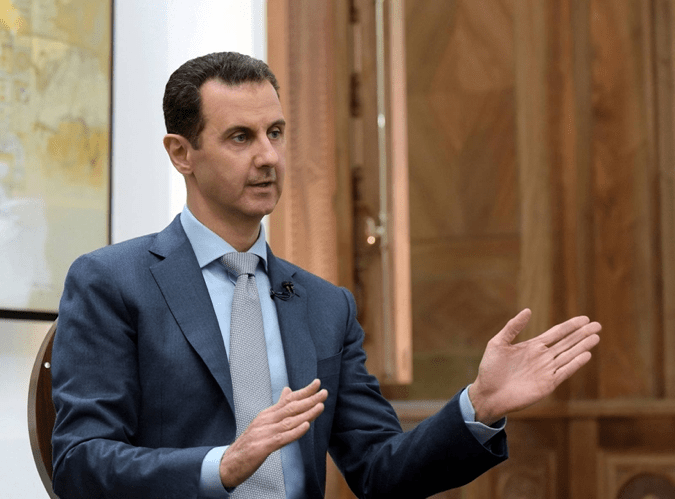
In response, the Syrian government launched a widespread crackdown on the opposition, both secular and Islamist. The cycle of protests followed by violent and often brutal crackdowns led to a civil war, one that still rages today. Iran, despite having ideological differences with Syria, came to the defense of its ally and is still currently fighting the Syrian opposition with boots on the ground.
The U.S. along with several other Western countries closed their Damascus embassies, broke diplomatic relations with the Assad regime, and made efforts on the international level to isolate Syria diplomatically and economically. This has seen limited success. Many observers view the Syrian Civil War to be a proxy war with two main factions; on one side the U.S. and its allies in Europe supporting the moderate rebels and on the other side, Russia and Iran supporting the Syrian government.
In 2013, Iran held a presidential election in which the hardliner, Mahmoud Ahmadinejad, who had advocated for a confrontational policy with Israel, the United States and its allies was replaced by a more moderate figure, Hassan Rouhani. While not quite as liberal as former President Khatami, some outside observers have declared Rouhani to be a “reformist”. Others a “pragmatist”. His critics have labelled him as “a wolf’s in sheep’s clothing.”
For its part, the Obama administration immediately tried reaching out to the new administration.
In September 2013, shortly after coming into office, Rouhani and Obama spoke on the phone, a conversation that marked the highest level of contact between the two governments in over three decades. While the call only lasted 15 minutes, both sides reinstated their commitment to resolving the Iranian nuclear issue diplomatically. The call was preceded by another between Iranian Foreign Minister, Mohammed Javad Zarif and U.S. Secretary of State at the time, John Kerry. There were plans in place to have the two presidents meet on the sidelines of the meeting of the 2013 UN General Assembly. However, the proposed meeting was cancelled by the Iranian side, as such a meeting would be seen as antagonizing to the more conservative political forces in the country.
From the start of the conflict, the U.S. government position of both the Obama and for part of the Trump administration has been that the government of Bashar al-Assad should be removed and replaced by a more democratic form of government constituting the moderate wing of the Syrian opposition. Recently, with the Syrian government making gains against the rebels, the U.S. has come to accept the reality and has scaled back support to the Syrian rebels.
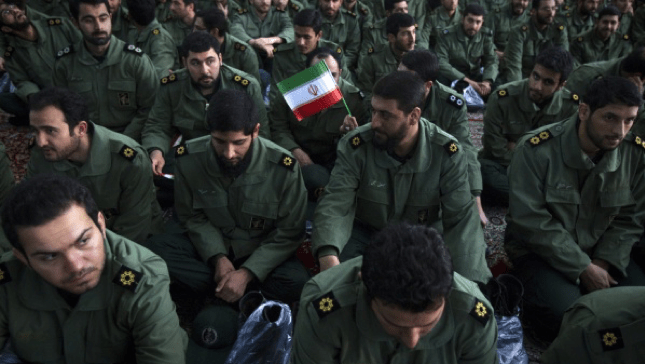
Since the start of the conflict, both the U.S. and Israel have expressed concerns over the presence of Iranian forces in Syria, especially those close to the disputed Israeli-Syrian border. There have been skirmishes and rocket attacks emanating from both sides. Israeli forces have conducted targeted airstrikes against Iranian military bases in Syria, further contributing to ongoing tensions.
More recently however, both Iran and the U.S. have yet again been finding themselves on the same side again in combatting Islamic fundamentalism and as such Islamic terrorism. Despite decades of mistrust and hostility, limited cooperation in fighting rebel groups such as the Islamic State and other primarily Sunni militias has given hope to a new phase in relations between the two countries.
Starting in October 2013 and continuing throughout 2014 and into 2015, Iran and the P5+1 parties participated in difficult negotiations to strike a balance between Iran getting to comply with the International Atomic Energy Agency’s (IAEA) guidelines and UN resolutions that had resulted in economic sanctions. There were also goals to get Iran to satisfy concerns brought up chiefly by Israel and the United States. Discussions mainly took place in Vienna and Geneva, but different emissaries on behalf of the IAEA, the UN and several of the P5+1 countries made trips to Tehran and to different venues for further discussions.
While most observers have noted that under the current deal, Iran has been complying with all rules and guidelines, Israel under Prime minister Benjamin Netanyahu has made strong efforts to rally against the deal. In a speech to a joint session of Congress, Netanyahu stated that the Iran deal “would all but guarantee that Iran gets nuclear weapons, lots of them.”
Nonetheless, in July 2015, the JCPOA was signed and under its terms, Iran agreed to a long-term deal of its nuclear program. Under the deal, Iran promised to limit some of its more sensitive nuclear activities and to allow international inspectors to inspect suspected nuclear sites in return for a loosening of restrictions. Under the deal, the number of centrifuges Iran would be allowed to possess was dramatically cut, and approximately 98% of Iran’s uranium stockpile would be eliminated. The deal was touted by all sides as a massive success. The success of the agreement led some to become optimistic about the future of American-Iranian relations.
However, once President Trump office in 2017, he immediately sought to reverse most Obama era policies – domestic and foreign. Trump heavily campaigned against the nuclear deal, claiming that it would allow Iran to develop nuclear weapons quicker and that a better deal could be had.
When the first reports about an American withdrawal from JCPOA initially surfaced, the Iranian response was that of confusion and eventually anger. In all nuclear site inspections since the signing of the agreement, international inspectors had determined that Iran was not in violation of any parameters of the agreement.
There were extended diplomatic efforts on the part of the other signatory parties to keep America in the agreement. However, these attempts failed and in May of this year, the Trump administration publicly announced that they were leaving JCPOA and that nuclear related sanctions would be reintroduced. Iranians responded by protesting on the streets of Tehran.
The response of the Iranian government was muted. President Rouhani said Tehran would “bypass Washington” and remained committed to the deal. The Iranians also took the time to highlight that the U.S. has a historically bad record in honoring international treaties. The American withdrawal from the agreement marked a rare moment when American allies publicly rebuked the U.S. and its decision for leaving the agreement.
Under the Trump administration, American-Iranian relations have taken a nosedive. The Trump administration has made Iran its public enemy by its rhetoric and threats of military action. John Bolton, Trump’s National Security Advisor has put Iran at the top of his agenda, and is largely responsible for crafting the administration’s largely anti-Iranian stance.
Many observers believe that the American withdrawal from JCPOA, the use of opposing proxy forces in regional conflicts along with the current political climate in both Tehran and Washington have resulted in a standoff between the two countries, where neither side wants to give in and as such any diplomatic breakthrough is highly unlikely as of now.
According to Maryam Attarpour, she believes that under the current U.S. administration, the chances of a diplomatic breakthrough are highly unlikely. However, she has not given up hope that someday, the two countries will once again have normal relations with one another.
“I am hopeful that they will (reestablish diplomatic relations), but I am hesitant to say it will be possible in the next few years,” said Attarpour. “I supported President Obama’s administration and their diplomacy toward Iran. The policies made us hopeful for better relations in the future.”
When asked if Iran and the United States would ever establish a normal relationship again, Gary Sparrow, who referenced the recent détente with North Korea was optimistic.
“A year ago, I never thought we would have a relationship with North Korea,” said Sparrow. We do now though. These are long, hard and slow things that can take decades to materialize. Other times they happen overnight. I wouldn’t completely rule it out, but I don’t see it right now. If anything, this would happen after the 2020 election.”
When asked the same question, Mark Sawoski had a different opinion.
“Yes, hope is eternal. It will require a change of government in Iran. This is not outside the realm of possibility. The current regime is considered to be widely corrupt and oppressive. Younger clerics find Khamenei to be degrading to Islam. Younger generations tend to view the regime unfavorably as well…U.S. sanctions and the mismanagement of the economy by the clerics has led to economic decline.”
It is to be hoped in the future that Iran and the United States will someday be able to solve their differences and reestablish the strong and beneficial partnership that existed over 40 years ago.
For Sina Noshad and his family, the hostile relationship has had a direct impact on his life and that of his family. Noshad cannot see his sister, and he is unable to leave the country, as there is no promise that he will be able to get a visa upon his arrival back to the U.S under the travel ban. As a U.S. citizen, Maryam Attarpour says that when she visits Iran she feels like “a visitor who just speaks the language.” However, other than that she does not see a connection between herself and Iran.
Attarpour advocates that people educate themselves more on Iran, its culture and people.
“Meet an Iranian,” said Attarpour. “Speak to an Iranian. Ask questions and get answers before you make judgments on an entire population. We’re not the “axis of evil”, we’re actually pretty damn hospitable.”
 nashenews.com