
Air travel has in part been responsible for the proliferation of the COVID-19 pandemic worldwide, so what steps is the aviation industry taking to mitigate its spread?
May 1, 2020
By Noah Ashe
Credit – Noah Ashe
WARWICK, R.I. – As the coronavirus pandemic continues to intensify across the United States and the world, the aviation industry, recognizing the role international air travel has in spreading pandemics such as COVID-19 have begun to take steps and measures designed to mitigate the spread of the virus through air travel. Since first arriving in the United States in mid-January, the spread of the coronavirus has largely since halted most operations at airports across the country, including some of the busiest in the world.
In New York City alone, the three major airports are operating at about five percent of their normal passenger traffic according to Rick Cotton, the Executive Director of the Port Authority of New York and New Jersey, which operates the airports.
More locally in Rhode Island, at the time of this writing, the state has had more than 8,900 confirmed cases and 279 deaths.
Gov. Gina M. Raimondo (D) issued a “stay at home” order effective from March 28, where Rhode Islanders are not allowed to leave their homes unless they are considered essential employees, performing essential errands, such as shopping at the grocery store, banking, or getting physical exercise. This order is set to expire on May 8, although Gov. Raimondo has expressed doubts.

At Rhode Island T.F. Green International Airport in Warwick, the state’s only commercial airport and a major transportation hub, airport personnel are taking all necessary precautions to mitigate the spread of the virus and to cooperate with state health officials, according to John Goodman, the Director of Media and Public Relations for the Rhode Island Airport Corporation, which operates T.F. Green.
Goodman noted that the airport had recently invested in “enhanced cleaning technology”, which not only is more efficient and effective, but frees up cleaning staff to focus on more hands-on work. Goodman stated that this improvement was in response to the knowledge that during the average flu season, upwards of 60,000 Americans may die.
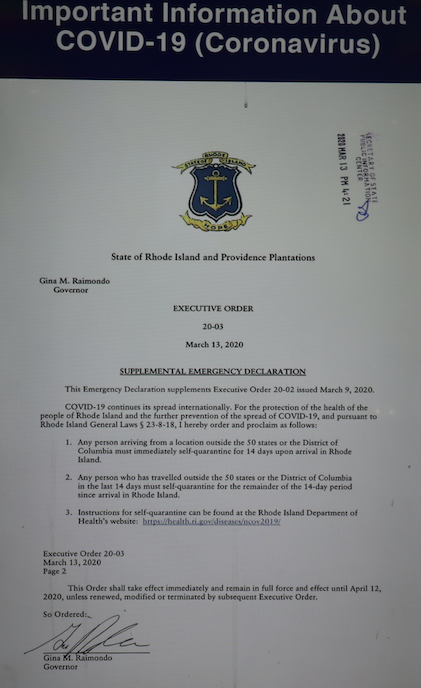
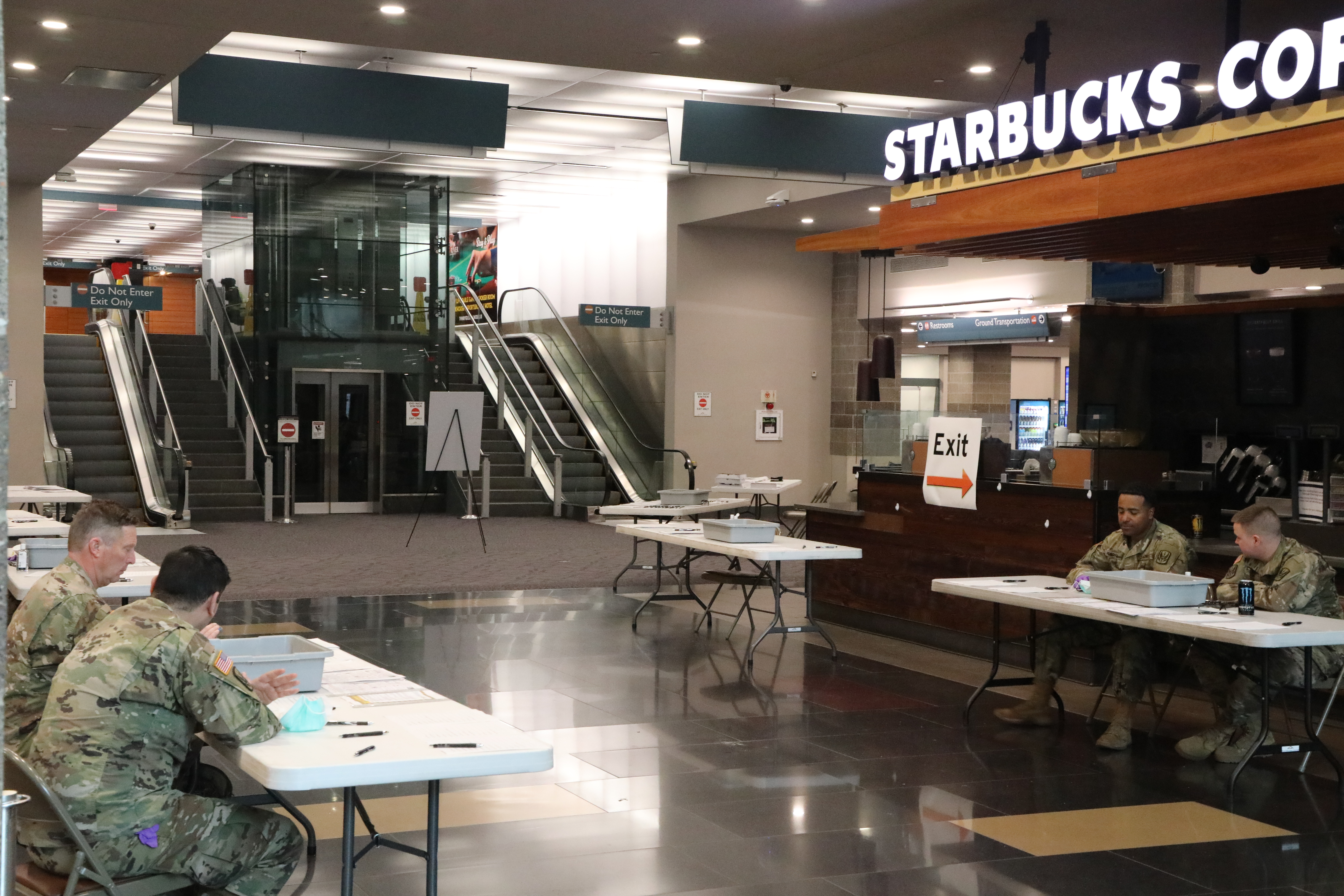
Travelers coming to Rhode Island from the airport have to pass through a mandatory Rhode Island National Guard checkpoint, where guards remind travelers of the governor’s executive order to self-quarantine for 14 days, to practice social distancing protocols and regularly washing hands and handed brochures on tips for self-quarantining and what to do if you think you are sick.
Captain Mark Indze, a Public Affairs Officer for the R.I. National Guard said he believes the state’s efforts are paying off. Indze explained that any time the state national guard is activated, they work within a framework that allows for close cooperation between the national guard and state government agencies.
“In this case the Rhode Island Department of Health and Human Services is the lead agency, so we came on board, we developed that relationship, learned exactly what they needed from us and what we needed…information is flowing freely,” said Cpt. Indze.
When asked about how long he believed the national guard would be deployed to the airport, Cpt. Indze stated that “they were not prepared to assume or make assumptions on how long” they were going to be there. He stated that the National Guard would be deployed for “as long as the Department of Health needs us to be.”
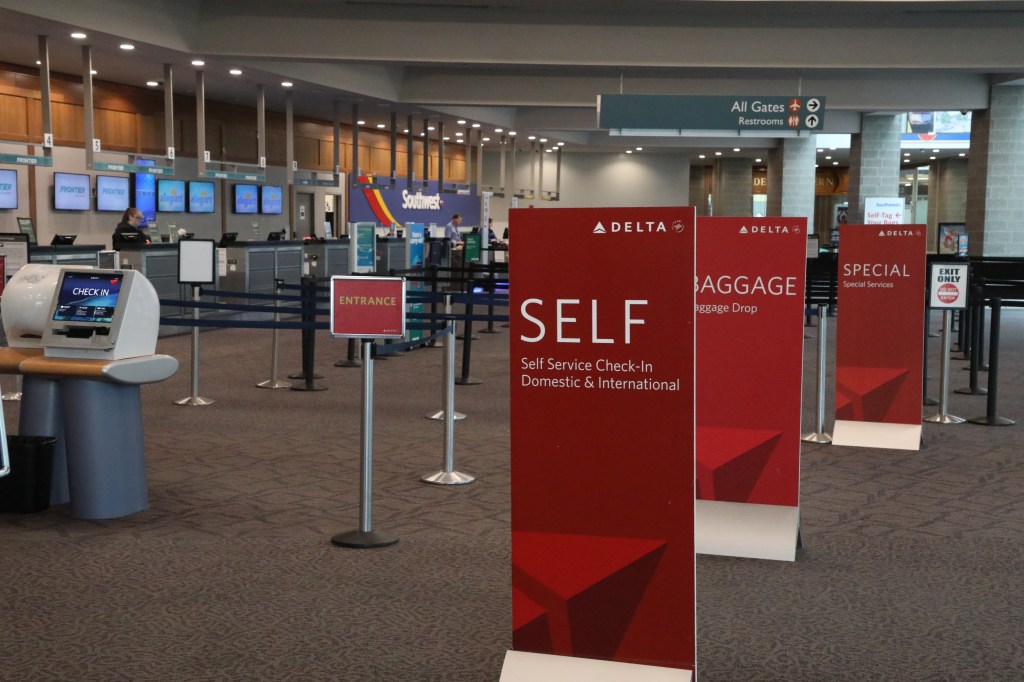
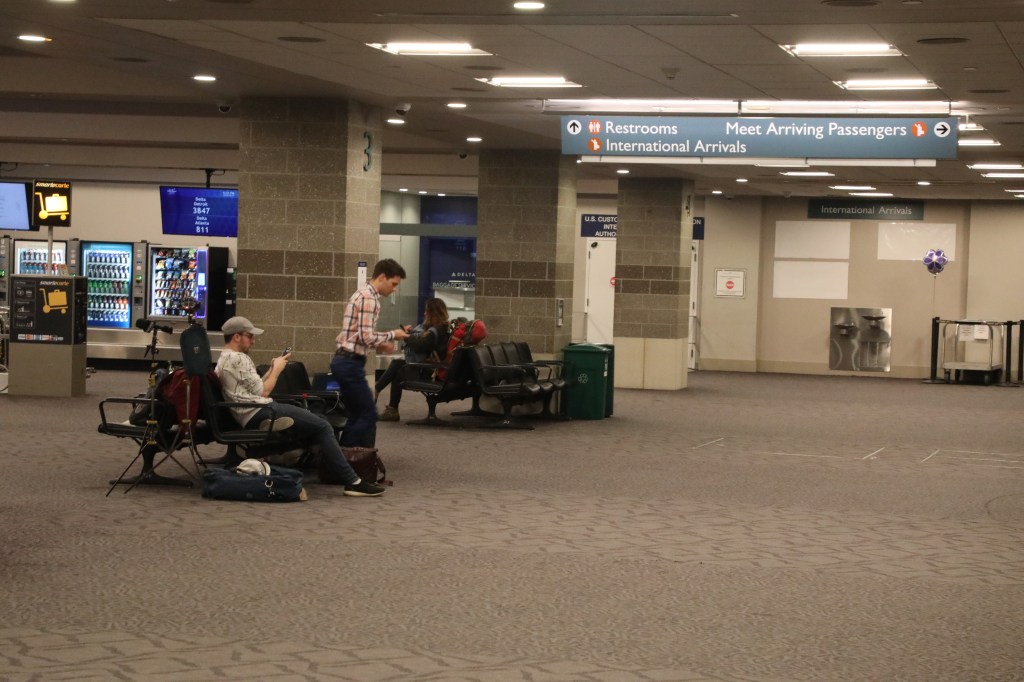
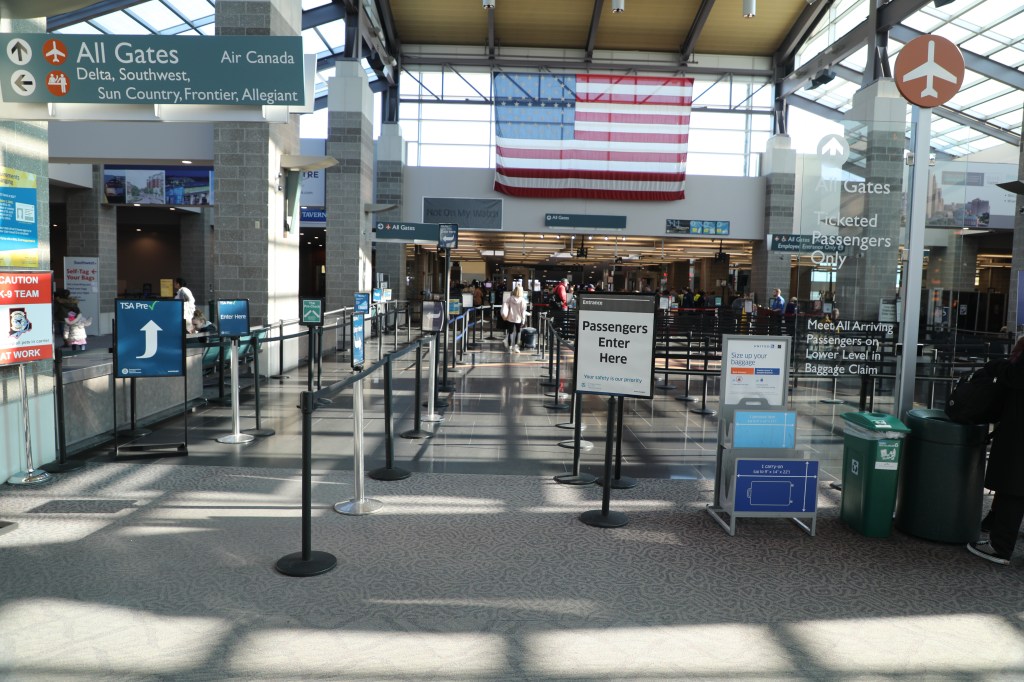
The disruptions in air travel caused by the pandemic were noticeable throughout T.F. Green’s terminal, with nearly deserted ticket counters, a TSA security checkpoint with only one officer present, and scant sightings of airport employees and travelers.
For many, both in the United States and globally, the pandemic has caused many colleges and universities to transition their classes online for the remainder of the academic year. This has caused many students, who live far distances from their schools to be forced to have to fly back home.
Gavin Okun, a senior at Roger Williams University in Bristol recounted his experience while flying back home to Texas.
“The scene at the airports, it was very empty. I flew Southwest both flights. With that, they didn’t do the normal in-flight services.”
While the FAA has yet to issue a formal ground-stop to all non-essential traffic, the CDC is urging Americans to avoid all non-essential travel for the time-being.
While some states have now either since reopened or plan on reopening their economies and businesses in the near future, health officials across the country have raised the alarm about opening prematurely and the impact this may have on the number of cases in the country.
Anna Tomasulo, the Emergency Communications Coordinator for the state Department of Health stated that numerous lessons will have to be learned from this pandemic and that the state is focused on avoiding a potentially worse situation in the future.
“Moving forward the response will evolve as we explore what we’ve been referring to as the ‘new normal’. What this new normal will look like will vary from industry to industry…increased testing capacity and an eventual treatment and vaccine will also likely have a significant impact.”
Cpt. Indze also remained optimistic on the future.
“Right now, our nation is facing a crisis that is unprecedented in both its nature and scope. That said, we do know what we’re facing. We know what the enemy is, we know how to deal with it. The pathway for it is very clear. It’s natural for people to be concerned in a time of unease and discomfort, but there’s no reason to be frightened. We know how this ends.”
For more information on the current state of the COVID-19 pandemic in Rhode Island, please visit, https://health.ri.gov/covid/ .
 nashenews.com